
Dr. Avais Syed provides evaluation and surgical treatment for patients with kidney stones and has expertise in advanced endourological procedures. His documented experience includes mini-PCNL, URSL and other endourological surgeries.
What Is RIRS Surgery?
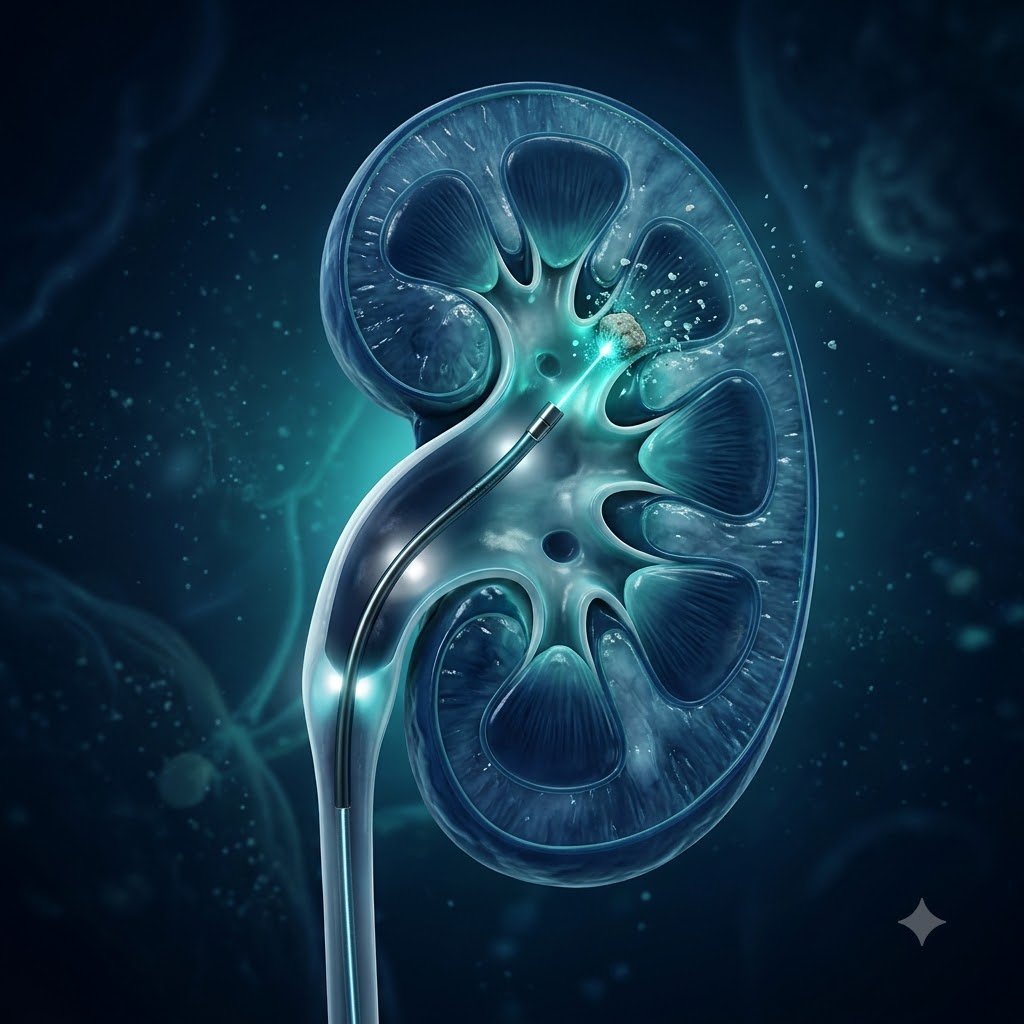
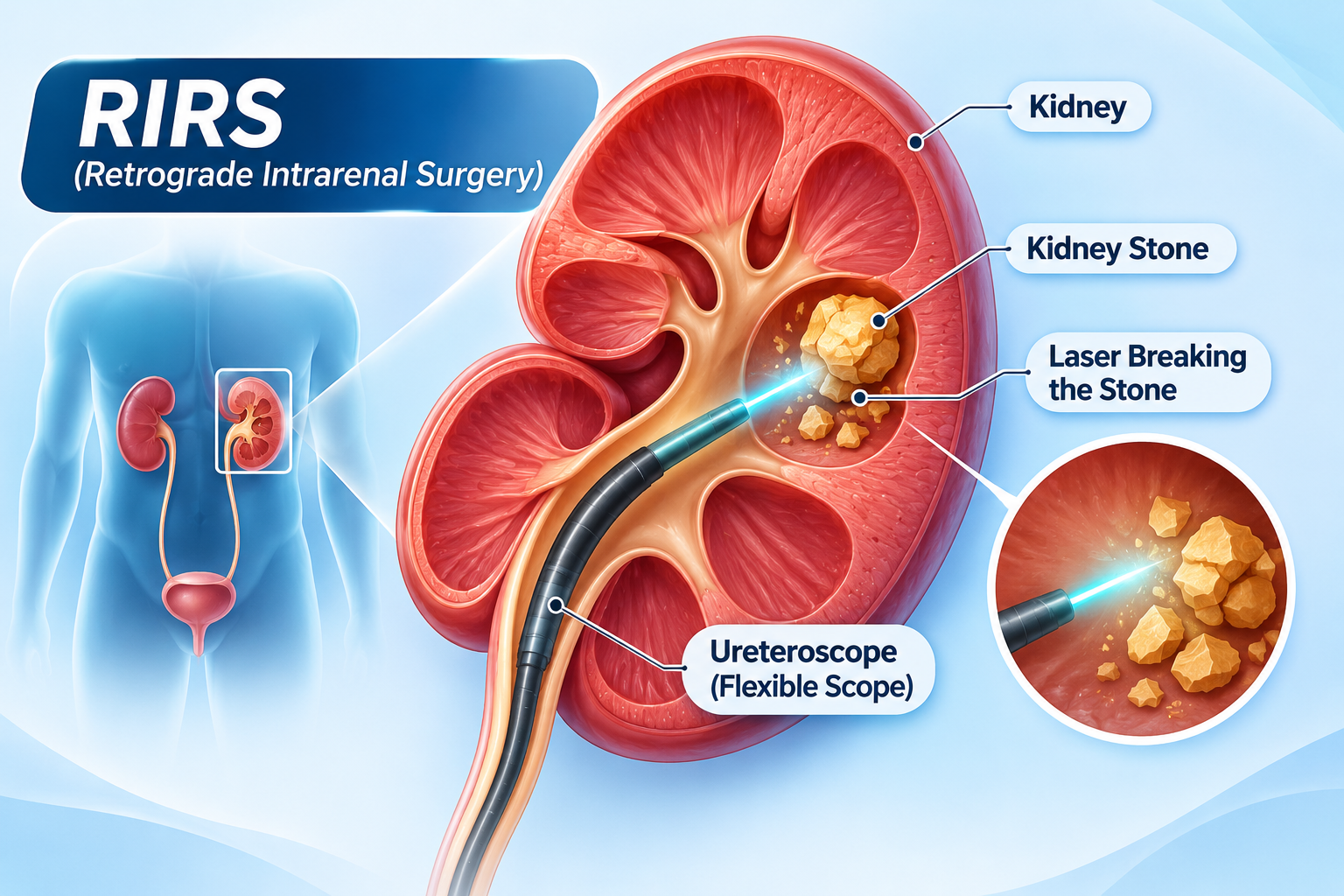
RIRS stands for Retrograde Intrarenal Surgery. It is a minimally invasive endourological procedure used to access stones located inside the kidney.
A flexible ureteroscope is carefully introduced through the urinary tract and guided into the kidney. Once the stone is reached, a laser may be used to break it into smaller fragments that can be removed or passed naturally.
The exact treatment approach depends on factors such as the size, number and location of the stone, as well as the patient's clinical condition.
When Is RIRS Recommended?
RIRS may be considered for selected patients with kidney stones when active stone treatment is required.
The decision depends on:
- Stone size
- Stone location
- Number of stones
- Urinary tract anatomy
- Previous stone treatment
- Symptoms
- Associated urinary problems
- Overall health
How Is RIRS Surgery Performed?
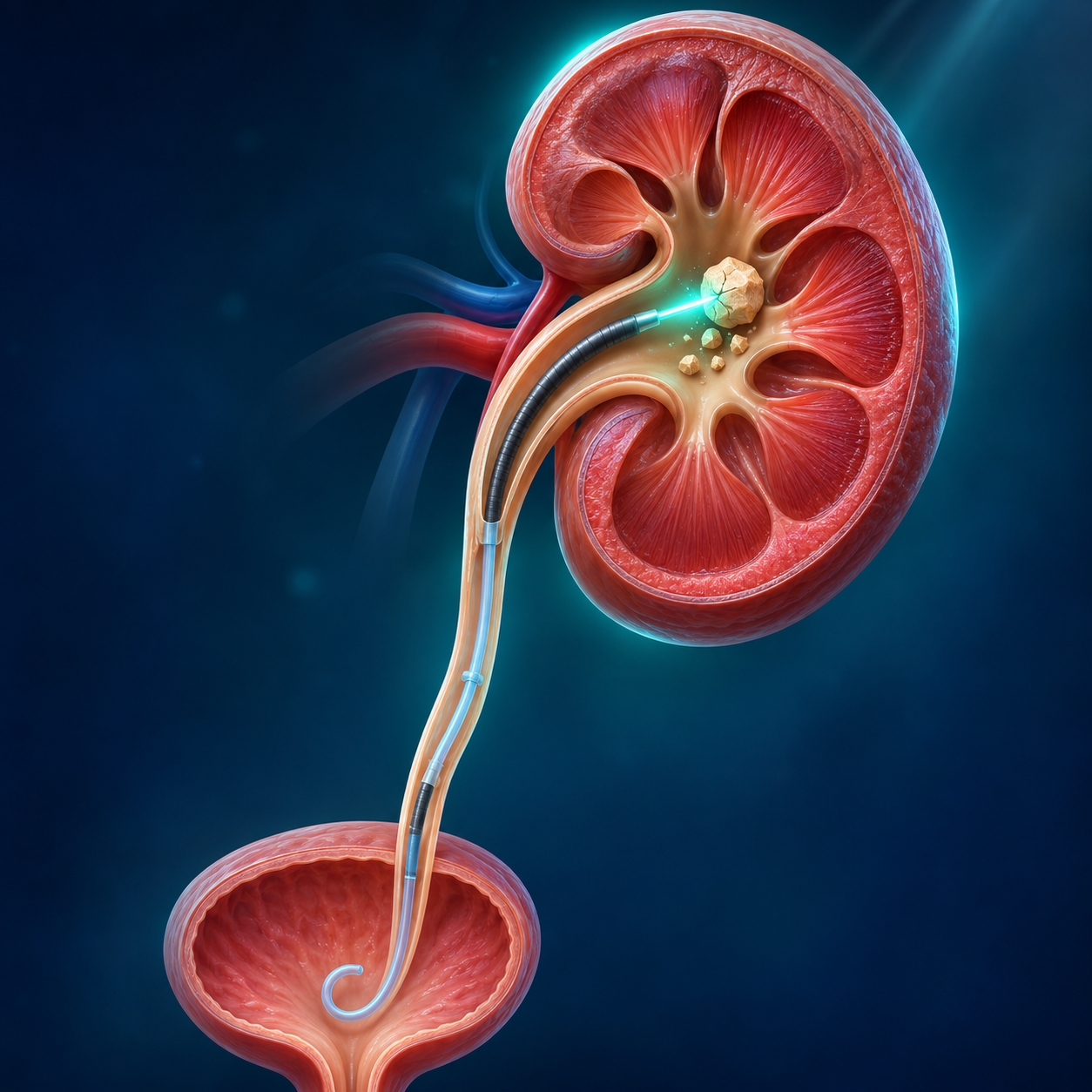
RIRS is performed through the natural urinary passage. The procedure generally involves:
-
1
Ureteroscope Entry
A flexible ureteroscope is passed through the urethra and bladder into the ureter.
-
2
Reaching the Kidney
The scope is guided into the kidney to identify the stone.
-
3
Stone Fragmentation
A laser can be used to break the stone into smaller pieces.
-
4
Stone Removal
Depending on the stone and treatment plan, fragments may be removed using suitable instruments or allowed to pass naturally.
-
5
Stent Placement
In selected cases, a temporary ureteric stent may be placed to support urine drainage and healing.
Benefits of RIRS
RIRS is a minimally invasive approach that may offer several advantages for appropriately selected patients.
- No large skin incision
- Access through the natural urinary passage
- Suitable for selected kidney stones
- Laser can be used for stone fragmentation
- Generally shorter recovery than some open surgical approaches
- Can be considered for stones in different parts of the kidney
The expected benefits and suitability vary from patient to patient.
RIRS vs PCNL
Both RIRS and PCNL are established procedures for kidney stone treatment, but they are different techniques.
| RIRS | PCNL |
|---|---|
| Access through the natural urinary passage | Access to the kidney through a small tract through the skin |
| Uses a flexible ureteroscope | Uses a nephroscope through the kidney access tract |
| Laser can be used to fragment stones | Stones are fragmented and removed through the access tract |
| Used for selected kidney stones | Often considered for larger or complex stones |
| Recovery depends on the individual case | Recovery depends on stone complexity and surgical approach |
The appropriate procedure depends on the individual patient's stone characteristics and clinical assessment.
RIRS Surgery Recovery
Recovery after RIRS varies depending on the stone burden, procedure performed and the patient's overall health.
Some patients may experience temporary:
- Mild urinary discomfort
- Burning while urinating
- Increased urinary frequency
- Blood in the urine
- Flank discomfort, particularly if a stent has been placed
Your urologist will provide specific instructions regarding medications, hydration, activity and follow-up.

Ureteric Stent After RIRS
A temporary ureteric stent may be placed after RIRS in selected cases.
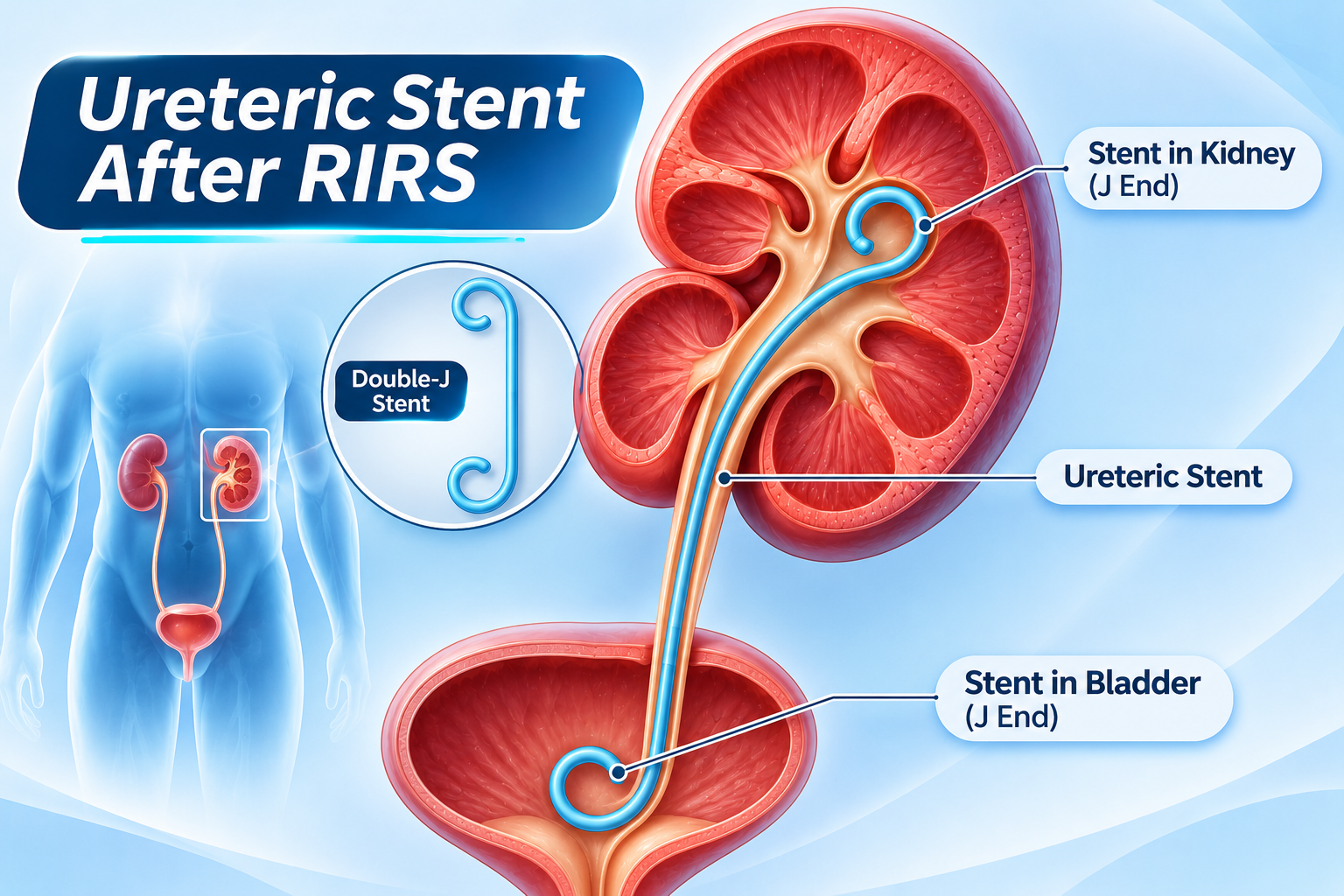
A stent helps maintain urine flow between the kidney and bladder while the urinary tract recovers. Some patients may experience urinary frequency, urgency or discomfort while the stent is present.
The duration for which the stent remains in place varies according to the clinical situation and should be discussed with the treating urologist.
Is RIRS Suitable for Every Kidney Stone?
No. RIRS is not automatically the right procedure for every kidney stone.
Treatment selection depends on the:
- Size of the stone
- Number of stones
- Location
- Stone composition where known
- Kidney anatomy
- Previous treatment
- Patient's medical condition
After evaluation and appropriate imaging, the urologist can discuss whether RIRS or another procedure such as URSL, mini-PCNL or PCNL is more appropriate.
RIRS Surgery Cost in Delhi
The cost of RIRS surgery in Delhi can vary between patients.
Factors that may affect the overall cost include:
- Stone size and number
- Stone location
- Type of procedure required
- Hospital and operating-room charges
- Anesthesia
- Diagnostic investigations
- Medicines
- Ureteric stent
- Follow-up requirements
- Additional procedures, if required
A personalized estimate can be provided after evaluating the patient's condition and treatment requirements.
Why Choose Dr. Avais Syed for RIRS Surgery?
Dr. Avais Syed has expertise in endourology and minimally invasive urological procedures. His documented surgical experience includes mini-PCNL, URSL, TURP, cystolithotripsy and other endourological procedures.
He has performed more than 5,500 surgeries, with more than 1,000 mini-PCNL procedures documented in his professional profile.
Treatment is planned according to the patient's diagnosis, stone characteristics and individual clinical requirements.
- Endourology expertise
- Minimally invasive procedures
- Individualized treatment planning

Frequently Asked Questions
What is RIRS surgery?
RIRS, or Retrograde Intrarenal Surgery, is a minimally invasive procedure used to treat selected kidney stones by accessing the kidney through the natural urinary passage.
Is RIRS a laser surgery?
Laser technology is commonly used during RIRS to fragment kidney stones. The exact technique depends on the patient's stone and treatment plan.
Is RIRS painful?
RIRS is generally performed under anesthesia. Some patients may experience temporary discomfort, urinary symptoms or flank discomfort after the procedure.
How long does recovery after RIRS take?
Recovery varies depending on the procedure and individual patient factors. Your urologist will provide specific post-operative instructions.
Is a stent required after RIRS?
A ureteric stent may be placed in selected patients. Whether a stent is required depends on the procedure and clinical situation.
Which is better, RIRS or PCNL?
Neither procedure is universally better. The appropriate option depends on the stone's size, location, number, kidney anatomy and other patient-specific factors.
What is the cost of RIRS surgery in Delhi?
RIRS surgery cost varies depending on the hospital, stone characteristics, investigations, anesthesia, stent and other treatment requirements. An individualized estimate is generally provided after evaluation.